

Deadly Hydrogen Sulfide Release: CSB’s Final Report
The US Chemical Safety and Hazard Investigation Board (CSB) released the Final Report on its investigation into the fatal release of over 27,000 lbs. of hydrogen sulfide (H2S) gas in Deer Park, Texas.
Due to H2S exposure, two contract workers died, 13 were transported to local medical facilities, and dozens more were treated at the scene of the incident.
The CSB’s report covers the cause and how the incident could have been prevented, the cost for the company, key safety issues, and recommendations for industry.
What Caused the Release?
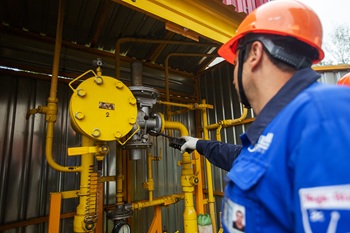
According to the CSB, the opening of incorrect equipment caused the release of pressurized hydrogen sulfide. The company did not establish an effective method to clearly identify the correct equipment to open before authorizing to do so. Contributing to the severity of the incident was the company’s failure to adequately evaluate the hazard posed by opening equipment within an active unit that was adjacent to a unit undergoing a turnaround, which increased the number of contractors exposed to the hydrogen sulfide release.
Additionally, the company deviated from several of its own policies and procedures that could have prevented the incident.
What Was the Cost?
The facility was not physically damaged. However, the company reported property damage of $12.3 million associated with the incident, resulting from loss of use.
Key Safety Issues
1. Positive Equipment Identification
The CSB stated in its report that the company did not have an effective standardized identification for equipment openings. Absent, misplaced, and inconsistently used equipment identifiers led boilermakers to the wrong equipment, resulting in the release of hydrogen sulfide.
2. Work Permitting and Hazard Control
Robust permitting systems are a generally accepted means to mitigate hazards, control work, and ensure that the intended equipment is worked on. The work permit process can be effective in controlling hazards by ensuring that work permits are unambiguous, are specific to the job, and consider risk to other processes.
The company’s permit-to-work system did not effectively control the hazards of opening piping within an active unit that was upwind of another unit where dozens of contractors were working.
3. Contractor Management
Because contract workers are typically hired to perform specific, specialized tasks, they are often unfamiliar with all facility hazards and operations. In this instance, the company had contract workers perform work in a live operating unit without first ensuring that they were aware of the hazards and controls in the new work area.
4. Conduct of Operations
Conduct of operations is the practice of executing operational and management tasks in a deliberate and structured manner to minimize variations in performance. The CSB has identified ways in which company policies and procedures (the standards of behavior) misaligned with actual practices (organizational performance). These discrepancies were apparent in the company’s standards applying both to operators and management personnel.
Lessons for Industry
To prevent future chemical incidents, and in the interest of driving chemical safety excellence to protect communities, workers, and the environment, the CSB urges companies to review the following key lessons:
1. Job aids for equipment-opening activities should clearly and positively identify which equipment is associated with the authorized work. Physically marking piping after positively identifying the location and using detailed drawings are proven methods to minimize the likelihood of error.
2. Improvised equipment identifiers can add unnecessary confusion, resulting in errors when selecting equipment to open. Standardized markings with verification requirements ensure that all parties understand which equipment should be opened before the work begins.
3. The scope of a work permit must be the right size for the job. A permit that is too broad may fail to control all the hazards a worker could encounter. Each permit should control the specific hazards for the work being authorized.
4. Hold points within a permit-to-work system help ensure that critical actions are not missed or skipped. To be effective, permit hold points must be unambiguous and clearly define responsibilities before the work can continue.
5. It is important to establish direct communication between company personnel and the workers performing a job to ensure that the handoff of information is as accurate as possible.
6. Even the best written programs are ineffective if they do not represent the actual practices of the people within the organization. A successful conduct of operations program ensures consistency in process safety, safe work practices, and how things are done at every level of the company.
Tags: Chemical safety, CSB, H2S, hydrogen sulfide
Find a Post
Recent Posts
Compliance Archives

Download Our Latest Whitepaper
In-flight hazmat incidents can be disastrous. This guide gives 5 tips for first-time air shippers to consider before offering dangerous goods for transportation on passenger or cargo aircraft.

By submitting your phone number, you agree to receive recurring marketing and training text messages. Consent to receive text messages is not required for any purchases. Text STOP at any time to cancel. Message and data rates may apply. View our Terms & Conditions and Privacy Policy.