

How Many Hazard Classes Are There?
Classifying hazardous materials is a crucial first step in transportation safety and regulatory compliance. This article provides key details about the 9 classes of hazardous materials regulated in transportation, in the United States and around the world.
In this blog:
How Many Hazard Classes Are There?
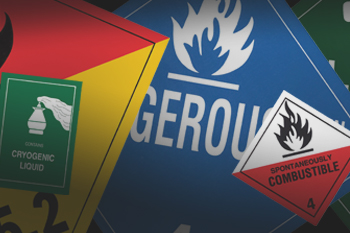
There are nine (9) classes of hazardous materials regulated in transportation. Each hazard class poses a distinct type of danger or hazard during transportation. If an accident occurs involving hazardous materials in a container, a vehicle, or piece of equipment, employees and/or emergency responders must be able to quickly identify what the material is.
In workplace and during transportation, hazards are communicated with markings and labels on packages and containers, hazmat placards on vehicles and large containers carrying hazmat, on a Safety Data Sheet (SDS) and on shipping papers/bills of lading, etc.The 9 hazard classes are:
- Class 1: Explosives
- Class 2: Gases
- Class 3: Flammable Liquids
- Class 4: Flammable and Reactive Solids
- Class 5: Oxidizers and Organic Peroxides
- Class 6: Poisons
- Class 7: Radioactive material
- Class 8: Corrosives
- Class 9: Miscellaneous hazardous materials
Knowing the nine classes is an important starting point for compliance with US or international hazmat/dangerous goods regulations. To properly classify a hazardous material, shippers of hazmat will need deeper knowledge about the type(s) of materials and the range of hazards represented in each class.
Hazard Class "Divisions"
Some of the nine hazard classes are separated into Divisions (e.g., 2.1, 2.2, and 2.3). Divisions represent different categories of materials covered within one hazard class.
Divisions 2.1, 2.2, and 2.3, for example, represent different categories of dangerous gases in Hazard Class 2—Flammable gases (2.1), Non-flammable gases (2.2), and Poison gases (2.3).
Other hazard classes separated into Divisions are:
- Class 1 (Division 1.1, 1.2, 1.3, 1.4, 1.5, 1.6)
- Class 2 (Division 2.1, 2.2, 2.3)
- Class 4 (Division 4.1, 4.2, 4.3)
- Class 5 (Division 5.1, 5,2)
- Class 6 (Division 6.1, 6.2)
For a full break down of all nine hazard classes and divisions, including their respective divisions, watch the video below or read the article Hazmat Essentials: The 9 Hazard Classes.
Video: All 9 Hazard Classes Explained
2026 Training Schedule Available Now:
Hazmat and RCRA Workshops & Webinars
When you offer hazmat into transportation, you are responsible for your material being properly classified based on its hazards.
Lion's 2026 schedules of workshops and webinars for hazardous waste professionals and shippers of hazmat/DG are available now! Find out when Lion's hazmat/DG and RCRA training will be in your area next—or find a webinar that fits your schedule.
Find a Post
Recent Posts
Compliance Archives

Download Our Latest Whitepaper
Look beyond the annual "Top 10 List" to see specifics about the most cited OSHA health & safety Standards and the individual regulations that tripped up employers the most last year.
.jpg?ext=.jpg)
By submitting your phone number, you agree to receive recurring marketing and training text messages. Consent to receive text messages is not required for any purchases. Text STOP at any time to cancel. Message and data rates may apply. View our Terms & Conditions and Privacy Policy.