

What OSHA Violations Are “Serious”?
An article in Safety and Health magazine provides a detailed look at OSHA’s 10 Most Cited Violations List for fiscal year 2025, highlights commonly overlooked regulations, and calls out types of health and safety violations that OSHA deemed “serious” in fiscal year 2025.
Types of OSHA Violations
The OSH Act of 1970 authorizes OSHA to inspect workplaces and cite employers for violations of health and safety regulations laid out in Title 29 of the Code of Federal Regulations (29 CFR).
An OSHA violation will fall into one of these categories:
- Other-than-serious. A violation that has a direct relationship to job safety and health, but is not serious in nature, is classified as "other-than-serious."
- Serious. A serious violation occurs “when the workplace hazard could cause an accident or illness that would most likely result in death or serious physical harm…”
- Willful. A willful violation of OSHA regulations occurs when the employer “either knowingly failed to comply with a legal requirement (purposeful disregard) or acted with plain indifference to employee safety.”
- Repeated. A repeated violation occurs when an employer If OSHA discovers a violation, and the employer has been cited previously
- Failure-to-abate. OSHA will cite an employer with a Failure to Abate Notice if the agency finds hazards that have not been abated (fixed) by the abatement date specified in a previous OSHA Notice.

OSHA defines a serious violation as a violation that creates “a substantial probability that death or serious physical harm could result.”
The maximum OSHA civil penalties for employer health and safety violations increase every year. The maximum penalty currently stands around $17,000 (per violation) for both serious and other-than-serious violations.
The minimum penalty for a serious OSHA violation is more than $1,000 per violation.
Monetary penalties for serious violations are typically larger and leave employers with fewer options for potential reductions of those fines. The gravest serious violations are not eligible for penalty reduction based on “good faith efforts” of the employer to achieve compliance, for example.
A recent issue of Safety and Health magazine expands on OSHA’s yearly 10 Most Cited Violations list and highlights the types of health and safety violations that OSHA deemed “serious” in fiscal year 2025.
Serious OSHA Violations, General Industry (29 CFR 1910)
Several OSHA Standards for general industry workplaces landed on the Top 10 Most Cited List last year, including chemical hazard communication, lockout/tagout, respiratory protection, and powered industrial trucks (e.g., forklifts).
For each OSHA Standard in the “top 10” this year, a majority of the violations cited by OSHA in were deemed “serious” violations.
#1. Machine Guarding
Violations of OSHA’s requirements for guarding machinery to prevent injuries from sparks, saws, etc., were deemed serious in more than four out of five cases. OSHA deemed 83% of machine guarding violations by employers in 2025 as serious.
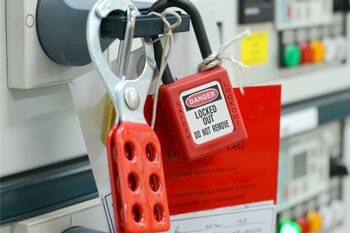
#2. Lockout/Tagout
The Control of Hazardous Energy or “Lockout/Tagout” Standard (29 CFR 1910.147) pertains to the locking and tagging of machinery and equipment to prevent unexpected movement that could severely injure or even kill an employee during regular maintenance or use. Of the estimated 2,177 total lockout/tagout violations cited by OSHA inspectors in FY 2025, roughly 77% of violations were deemed serious (1,688).
#3. Respiratory Protection
OSHA cited respiratory protection violations, including things like failure to fit test employees for respirators, 1,953 times in FY 2025. About 68% of those violations were "serious" violations.
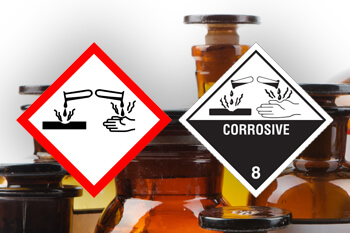
#4. Hazard Communication (HazCom)
OSHA’s requirements for informing and training employees about hazardous chemicals in the workplace and preventing chemical exposures ranked as the #2 most frequently cited OSHA Standard in 2025, behind only Fall Protection on construction sites.
Of the more than 2,500 hazard communication violations cited by OSHA inspectors last year, about 66% of them (1,675) were recorded as “serious” violations.
#5. Powered Industrial Trucks
For violations of the powered industrial truck Standard, more than 1,100 of them were “serious” out of 1,826.OSHA Safety Training
Get self-paced online OSHA safety training now at Lion.com/OSHA, such as OSHA 10-hour general industry training, HAZWOPER, and courses that address specific workplace hazards, like HazCom, forklifts, respiratory protection, LOTO, and more.
Find a Post
Recent Posts
Compliance Archives

Download Our Latest Whitepaper
In most cases, injuries that occur at work are work-related and must be recorded to maintain compliance with OSHA regulations. This report shows you the 9 types of injuries you don’t record.

By submitting your phone number, you agree to receive recurring marketing and training text messages. Consent to receive text messages is not required for any purchases. Text STOP at any time to cancel. Message and data rates may apply. View our Terms & Conditions and Privacy Policy.