

CSB Final Report: Catastrophic Chemical Fires and Toxic Gas Release
The US Chemical Safety and Hazard Investigation Board (CSB) released the Final Report on its investigation into the chemical reaction incident that occurred in Conyers, Georgia, on September 29, 2024.
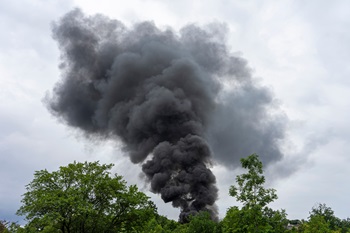
The incident resulted in fires and a plume of toxic smoke containing chlorine, hydrogen chloride, and bromine. Reports said that more than 100,000 people in the surrounding community and Atlanta metropolitan area were evacuated or advised to shelter in place.
Read on for our summary of the CSB’s identified cause, safety issues, and lessons for industry.
Cause of Incident
The CSB determined that a corroded sprinkler system component failed and caused the incident. Water contacted the stored pool-treatment chemicals inside the warehouse, initiated a decomposition reaction, and generated significant amounts of dense toxic smoke and heat that started fires.
The corrosion of the sprinkler system resulted from the corrosive environment created by stored chlorine-based chemicals in the building, an issue that was not proactively addressed.
The Board stated that the following issues all contributed to the incident and its severity:
- The design of the warehouse.
- The hazardous categories and large volumes of the materials stored inside.
- The lack of corporate implementation of risk mitigation strategies.
- Inadequate storage configurations hindered emergency response access to the initial reacting material.
Safety Issues
The following are summaries of safety issues that the US CSB said contributed to the incident.
Run to Failure
The company did not replace corroded pipes and sprinkler heads until they began to leak, even though leaking water posed a known risk of contact with stored chemicals that lead to decomposition reactions and off gassing.
Identification of Storage Hazards
The company failed to identify the hazards associated with storing hazardous materials, and this deficiency contributed to the initiation and inability to mitigate the consequences of the incident.
Risk Management and Oversight
The company had an obligation as an organization not only to understand the full hazards and risks associated with its stored pool, but to effectively assess and manage the risks inherent in the storage and handling of these materials to avoid the occurrence of an incident.
Further, the company failed to acknowledge and address the risks inherent in storing pool-treatment chemicals and missed opportunities to either prevent the incident or minimize the extent of its impacts to the surrounding communities.
Lessons for Industry
The CSB urges companies to review key lessons summarized below.
1. Pool-treatment chemicals can naturally off-gas corrosive vapors, creating a corrosive environment inside buildings that can corrode sprinkler system components, leading to failures and decomposition reactions that can result in fires. Users who handle and store pool-treatment chemicals should be aware of their corrosive properties to ensure that structures are properly designed and that an appropriate sprinkler system is selected to proactively prevent incidents.
2. It is important for all users of chemicals to understand the ability of the chemicals used or stored to create a corrosive environment due to the material evolving vapors during normal storage conditions, and ensure the correct safeguards are implemented to reduce the impact of the corrosive environment.
3. Storage layouts must provide unobstructed access to always allow effective monitoring of hazardous materials, particularly those that can undergo exothermic decomposition under normal storage conditions. Facilities should implement continuous automated systems, such as thermal cameras, to detect potential safety hazards early.
4. Organizations should ensure that all hazards of using and storing hazardous chemicals be assessed and properly mitigated. All risks, including worst-case scenarios, must be identified, evaluated, and mitigated appropriately to reduce the severity and likelihood of community impacts due to incidents at the site.
5. Users of the NFPA standards are responsible for properly identifying each applicable hazard classification associated with the chemicals they are using and storing. All relevant NFPA hazard classification requirements should be applied to ensure safe handling and storage.
Find a Post
Recent Posts
Compliance Archives

Download Our Latest Whitepaper
What to do before, during, and after a RCRA hazardous waste inspection to defend your site from rising State and Federal penalties.

By submitting your phone number, you agree to receive recurring marketing and training text messages. Consent to receive text messages is not required for any purchases. Text STOP at any time to cancel. Message and data rates may apply. View our Terms & Conditions and Privacy Policy.