

US DOT to Align Hazmat Regs With International Standards
US DOT PHMSA recently published a Proposed Rule to align the Hazardous Materials Regulations (HMR) more closely with international standards, including the 2025–26 ICAO Technical Instructions (TI), the 2024 IMDG Code, and the 23rd revised UN Model Regulations. The rule’s comment period ends on April 13, 2026.
View the Proposed Rule in the Federal Register.
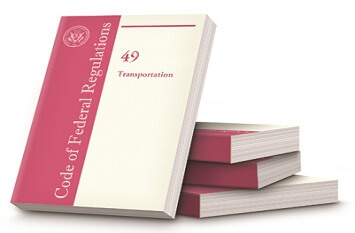
Proposed Changes to the Hazmat Regulations
The HM-215R rule proposes:
- Additions and revisions to the Hazardous Materials Table (172.101).
- Modifications to several hazmat special provisions (172.102).
- New provisions for sodium-ion batteries.
- New state-of-charge provisions for certain lithium and sodium-ion batteries transported by air.
- Updated emergency response information for UN 3536 lithium battery shipments.
- Revisions to the organic peroxides table (173.225).
- Amendments to provisions for the transport of tetramethylammonium hydroxide (TMAH).
- Adding exceptions for ammonium nitrate.
- Adding a new special provision for nitrocellulose membrane filters (UN 3270).
- The extension of a relief provided for Division 2.2 non-flammable and non-poisonous compressed gases (limited quantity provisions).
Sodium and Lithium Battery Updates in HM-215R
Three of the ten “noteworthy proposals” from the proposed rule are updates for sodium and/or lithium batteries.
New HMT Entries and Transport Provisions
PHMSA proposed to add new HMT entries and transport provisions for sodium-ion batteries to align with changes adopted in the latest ICAO TI and UN Model Regulations. International regulations now regulate sodium-ion batteries in the same way as lithium-ion batteries.
Expanded State-of-Charge Requirements
To align with the ICAO TI and IATA DGR, PHMSA proposed expanding current state-of-charge requirements to certain lithium and sodium-ion batteries in or with equipment when transported by air. The new provision would limit the amount of energy stored to 30 percent or less of the battery's capacity at the time of transport.
Improved Emergency Response Information
The Agency proposed to amend Special Provision 389 to require that the emergency response information for UN 3536 specifically identify the predominant type of energy storage battery installed in the unit (e.g., lithium-ion batteries or lithium-metal batteries) and provide information on immediate methods for handling fires.
Training for Hazmat Shippers
Hazmat shipper training is required by law for any employee who, in the course of employment, directly affects hazmat transportation safety.
Lion's Hazmat Ground Shipper Certification (DOT) training provides DOT hazmat training to prepare and offer hazardous materials shipments for transportation by ground. Hazardous material training covers a step-by-step approach to ensure full compliance with the 49 CFR Hazardous Materials Regulations (HMR).
Find a Post
Recent Posts
Compliance Archives

Download Our Latest Whitepaper
This guide will help you identify 25 of the most -cited errors in RCRA training, recordkeeping, hazardous waste ID, container management, universal waste, and laboratories.

By submitting your phone number, you agree to receive recurring marketing and training text messages. Consent to receive text messages is not required for any purchases. Text STOP at any time to cancel. Message and data rates may apply. View our Terms & Conditions and Privacy Policy.