

What Makes Lithium Batteries Dangerous in Transportation?
There are usually only around two or three battery-related emergencies per one million batteries. However, with lithium batteries, it is not about how likely emergencies are; it is about how dangerous they are when they occur.
Lithium battery packages are one of the top hazardous materials when it comes to inspections. Why is the Department of Transportation (DOT) so concerned with lithium batteries?
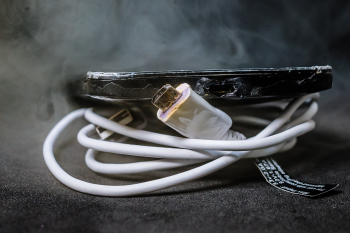
The danger of lithium batteries in transportation
The biggest hazard associated with lithium batteries is the fires that they can create, but a battery emergency can also lead to venting of gases, explosions, flying metal shrapnel, and harmful smoke. Lithium batteries have been reported as the cause of at least two plane crashes with associated loss of life and extreme property damage.
What causes lithium battery fires?
Lithium battery fires are often caused by internal short circuits. However, a poorly manufactured battery or a battery with any kind of mechanical damage (which can be caused by dropping or crushing it) can also result in a fire.
What is thermal runaway?
When a battery is faulty, it can lead to a hazard cycle known as “thermal runaway.” If a battery begins to overheat beyond what can be vented off, it will increase the temperature inside the cell. This rise in temperature results in increased current, which then causes an increase in chemical reaction rate. As the chemical reaction rate increases, more heat is produced, which starts the cycle all over again.
The increase in temperature and pressure becomes too much for the cell, and the battery can explode and vent its contents. This can then lead to a chain reaction in which nearby cells or batteries go into thermal runaway as well. If there are many batteries being stored together, you could have an entire pallet or storage area with batteries going into thermal runaway. A lithium battery fire can engulf a vehicle quicker than you can respond. Burning trucks may be easy to escape, but a burning plane is a very different story.

Lithium batteries & worker safety
Most workers will not think much about the dangers of lithium batteries, but there are some simple safety measures employees can take.
For instance:
- Protect batteries from mechanical damage, such as crushing, puncturing, and disassembling them.
- Avoid rough handling that could lead to dropping the battery and causing damage.
- Avoid subjecting batteries to excessive shock and vibration.
- Work areas should be clear of conductive surfaces and items (e.g., made of metal).
- Use the correct chargers when charging batteries.
- Do not place batteries into water or fire.
- Treat all dropped batteries as “hot.” It may not be immediately apparent that a battery has gone into thermal runaway.
Shipping lithium batteries, safely and in compliance
Shipping Lithium Batteries online course: Build in-depth expertise on how to class, package, mark, label, loading, unload, and document lithium-battery ground, air, and vessel shipments.
Shipping Lithium Batteries webinar: The same material, led by a Lion instructor & regulatory expert.
Both options include lithium battery safety training at no extra cost.
Find a Post
Recent Posts
Compliance Archives

Download Our Latest Whitepaper
Tips to identify and manage universal waste under more-stringent state regulations for generators and universal waste handlers in California.

By submitting your phone number, you agree to receive recurring marketing and training text messages. Consent to receive text messages is not required for any purchases. Text STOP at any time to cancel. Message and data rates may apply. View our Terms & Conditions and Privacy Policy.