

Sugar Explosion: Facts, Cause, and Six Safety Lessons
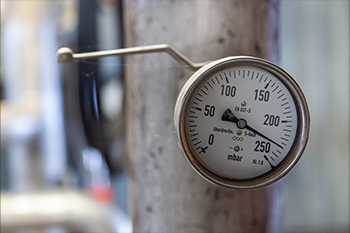
On November 12, 2024, at a caramel coloring manufacturing facility in Louisville, Kentucky, a batch reactor’s pressure control valve failed while in the closed position. Blocked-in gases and vapors resulted in abnormally high temperature and pressure levels, and an accelerated reaction from a caramel coloring sugar ingredient added to the rapidity with which temperature and pressure built.
Facility personnel were unaware that the sugar ingredient could react like this. So, the cooling system and emergency pressure relief system were not ready for the scenario, and neither system could stop the exponentially rising temperature and pressure.
The reactor’s maximum allowable working pressure was 75 psig. The maximum pressure recorded at the time of the event was 237 psig. Then, the reactor exploded. The incident killed two workers and injured three more.
Facts and Findings
The reactor was manufactured in 1978 at a facility in California that shut down in 2008. It was kept in storage until 2021, when it was removed from storage and modified to meet the Louisville facility’s design requirements and installed at the site.
The CSB concludes that had the Louisville facility been required to implement the safety management system elements required under the OSHA PSM standard and the EPA RMP rule, including Process Hazard Analysis, Management of Change, and Process Safety Information, the personnel involved in the reactor’s design at the Louisville facility would have had much more robust and reliable opportunities to become aware of the caramel coloring sugar ingredients’ decomposition hazards, which could have led to the design of an emergency pressure relief system for the reactor, which could have prevented the accelerated decomposition scenario and the resulting incident.
Cause: Undersized Relief, Process Safety Deficiencies, Training Failures
The CSB determined that the cause of the explosion was a high-pressure condition resulting from the accelerated decomposition of a sugar ingredient. The high pressure could not be adequately relieved through the undersized emergency pressure relief system. The emergency pressure relief system was undersized due to the facility management’s fundamental lack of understanding of the chemical reaction hazards associated with sugar ingredients. To prevent the incident, the existing emergency pressure relief system would have needed to be four times larger.
Deficiencies in Process Safety Policy Implementation
CSB said that the company’s institutional knowledge of caramel coloring manufacturing hazards was lost due to serious deficiencies in the facility’s implementation of its process safety policies. That loss of knowledge allowed the installation of an undersized emergency pressure relief system for the reactor.
Failure to Adequately Train
The Board said the Louisville facility’s failure to adequately train and to automatically alert personnel when safe operating limits were reached had contributed to the severity of the incident. As a result, facility personnel continued to troubleshoot while the reactor was in an unsafe condition instead of evacuating the building.
Lack of Siting Analysis
Also contributing to the severity of the incident, per CSB, was the lack of a facility siting analysis for the location of the control room, which was situated near the reactor and constructed without blast protection.
Six Key Safety Lessons
To prevent future chemical incidents, and in the interest of driving chemical safety excellence to protect communities, workers, and the environment, the CSB urges companies to review these key lessons:
1. Chemical facilities should analyze any event in which their chemicals or processes produce unanticipated temperature or pressure changes. Such events could indicate that the chemicals underwent a chemical reaction that must be understood to allow for the proper and safe design of equipment. Comprehensive reactivity testing (for example, calorimetry testing) on ingredients and final products can provide important information on temperature and pressure behavior during chemical reactions, which is essential information when sizing emergency pressure relief systems to protect equipment, workers, and communities from reactive hazards.
2. Safety data sheet (SDS) chemical hazard information can vary substantially between suppliers. End users should not rely solely on hazard information contained in the SDS when using the chemical at elevated temperatures or pressures, or with other chemicals with which the chemical could react. Additional hazard analyses may be needed to prevent process safety incidents. Companies should seek additional publicly available information, or obtain additional information through testing, to supplement information contained in a material’s SDS.
3. Hazard analyses and effective change management processes are critical aspects of a robust process safety management system. Additionally, they are essential tools to document institutional knowledge of identified hazards and their safeguards, allowing this important information to be communicated to new personnel who were not at the site when the hazards were discovered and the safeguards were established.
4. Companies should ensure they are following industry guidance for revalidation timelines of hazard analyses and have competent personnel leading and contributing to the discussions. If companies do not have adequate personnel, outside experts should be hired to assist in identifying hazards and safeguards.
5. Companies should set, define, and train all employees on safe operating limits to ensure personnel are able to identify that the equipment has reached an unsafe condition, that troubleshooting efforts need to end, and that predetermined actions must be taken to protect employees. Visual and audible alarms should be utilized to alert personnel that safe limits were exceeded and established response steps should be initiated.
6. When buildings are occupied by personnel or contain equipment critical for safe operations, they must be adequately designed or located to protect from fires, explosions, or toxic releases. Companies should conduct facility siting analyses of normally occupied spaces, such as control rooms, and make design changes as appropriate, to protect people and critical equipment from identified process hazards.
Final Report, U.S. Chemical Safety and Hazard Investigation Board
New Recommendations for Industry
US CSB recommended that each of the company’s facilities that manufacture caramel coloring products hires a new or identify a current employee who is competent in process safety management concepts; establishes automatic alerts, such as alarms or control screen indications, to notify operators when a safe operating limit has been reached; and contracts third parties to:
- Analyze the reactivity of the sugar ingredients in the caramel coloring product manufacturing process.
- Develop process safety management systems.
- Design adequate emergency pressure relief systems for the vessels involved in manufacturing caramel coloring.
- Conduct a facility siting study before constructing caramel coloring facilities to help protect facility occupants and critical equipment from hazards created by explosion, fire, or toxic material release, using published industry guidance.
US CSB also recommended the company create and fill a corporate senior leadership position responsible for overseeing process safety at all its facilities. This individual should develop and implement PSM system policies, including one to address training operations personnel on defined safe operating limits and actions to take if those limits are exceeded.
The Board made multiple recommendations about informing industry about the incident and updating sugar Safety Data Sheets to include decomposition temperature, the consequences of exceeding that temperature, and the decomposition products produced.
Re-stated Recommendations for Regulators
US CSB reissued recommendations 2001-01-H-R3 and 2021-02-I-WV-R13 to US EPA and OSHA, respectively. Both recommendations are from the 2002 CSB Reactive Hazard Study.
What Is the CSB?
The CSB is an independent, nonregulatory Federal agency charged with investigating incidents and hazards that result, or may result, in the catastrophic release of extremely hazardous substances. The Board does not issue citations or fines but makes safety recommendations to companies, industry organizations, labor groups, and regulatory agencies such as OSHA and EPA.
Takeaway: Training and Leadership Are Vital
This incident highlights how crucial emergency response and safety training, and safety leadership, really are.
Employees working at covered facilities must be trained “in an overview of the process and in the operating procedures” that emphasizes safety and health standards, emergency operations (including emergency shut down), and safe work practices [29 CFR 1910.119(g)(1)(i)]. And, without someone on site in charge of ensuring process safety management policies are adequate and implemented, the consequence of equipment failure is more likely to be unfortunate, preventable tragedy.
Tags: Chemical safety, CSB, process safety management, safety, worker safety
Find a Post
Recent Posts
Compliance Archives

Download Our Latest Whitepaper
This report details major changes for hazardous waste generators from US EPA’s Generator Improvements Rule, as well as the latest updates from states that are still working to adopt new, stricter Federal requirements.

By submitting your phone number, you agree to receive recurring marketing and training text messages. Consent to receive text messages is not required for any purchases. Text STOP at any time to cancel. Message and data rates may apply. View our Terms & Conditions and Privacy Policy.