

RCRA Rules to Watch in 2026
While a US Federal government "shutdown" remains effect as of Tuesday morning, November 4, US EPA plans to advance several hazardous waste rulemakings once Congress agrees to a budget.
Upcoming RCRA regulations impacting hazardous waste generators and transporters include an official sunset date for the use of paper hazardous waste manifests, the addition of new universal wastes to the program in 40 CFR Part 273, and a rule (proposed last year) to list nine per- and polyfluoroalkyl substance (PFAS) as "hazardous constituents" under RCRA.
Sunset on Paper Hazardous Waste Manifests
EPA plans to establish a timeline to phase out the use of paper hazardous waste manifests in favor of electronic manifests (e-Manifests). Since launching the e-Manifest program in 2018, EPA has established fees and taken other steps to incentivize the use of electronic manifests for all stakeholders. EPA has long said that wide adoption of e-Manifests is needed to fully realize the benefits and efficiencies of the system.To date, EPA says, only a small percentage of the roughly two million manifests received each year are submitted in electronic format “despite years of system improvements and outreach to industry.” In the most recent Unified Agenda of Regulatory and De-regulatory Actions, released pre-shutdown, EPA indicated that a proposed rule to “sunset” paper manifests could appear as soon as January 2026.

New Universal Wastes
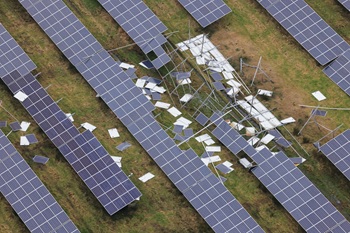
EPA will propose adding solar panels to the universal waste regulations, providing a straightforward method facilities can follow to handle discarded solar panels and promote recycling. EPA also plans to propose “universal waste standards specifically tailored to lithium batteries.”The Universal Waste standards in 40 CFR Part 273 provide a streamlined set of management requirements for certain types of waste that are common across all industries, such as lamps (i.e., light bulbs), batteries, and aerosol cans.
Some states allow for additional wastes to be managed as universal waste. California and Hawaii, for example, allow solar panels (i.e., “photovoltaic modules” or PV modules) to be managed as universal waste. EPA maintains a universal waste webpage that includes a table with details about each State’s universal waste program.
Listing of PFOA, PFOS, PFBS, and GenX as RCRA Hazardous Constituents
In February 2024, EPA proposed adding nine per-and polyfluoroalkyl substances (PFAS) to the list of “hazardous constituents” under the RCRA program: PFOA, PFOS, PFBS, HFPO-DA (GenX), PFNA, PFHxS, PFDA, PFHxA, and PFBA.Listing a substance as a “hazardous constituent” under RCRA is a step toward regulation as a hazardous waste. To list a waste as a hazardous waste in the regulations, EPA must show that the waste contains a hazardous constituent.
The list of hazardous constituents is found in Appendix VIII to 40 CFR Part 261. For more details, see the February 2024 proposed rule.
EPA may or may not move forward with the rule that was proposed last year. The agency may re-open the comment period on this rule before deciding how to proceed.
In the case of a separate rule concerning water quality standards for a handful of the same PFAS chemicals—PFOA, PFOS, PFNA, PFHxS, and GenX—EPA eliminated proposed limits on PFBS, PFXX, and GenX, but maintained strict limits for PFOA and PFOS.

Get RCRA Training—When You Want, Where You Want
US EPA requires hazardous waste professionals to complete annual training on the RCRA requirements. Lion makes it easy to meet your RCRA training mandate in a variety of formats—nationwide public workshops, convenient online courses, live webinars, and on-site training.
Browse RCRA training options here to find the course that fits your needs, your schedule, and your learning style.
Find a Post
Recent Posts
Compliance Archives

Download Our Latest Whitepaper
Start with these fundamentals to simplify hazardous materials shipping compliance.

By submitting your phone number, you agree to receive recurring marketing and training text messages. Consent to receive text messages is not required for any purchases. Text STOP at any time to cancel. Message and data rates may apply. View our Terms & Conditions and Privacy Policy.