

Dust Explosion: Safety Issues and 7 Lessons for Industry
The US Chemical Safety and Hazard Investigation Board (CSB, the Board) recently published a video accompanying its Final Report on a dust explosion incident that injured 19 employees, including fatal injuries to five.
In its video and Final Report, the Board described the likely cause of the explosion, safety issues at the site, and seven lessons that industry can learn from this incident.
Fatal Incident on May 31, 2017
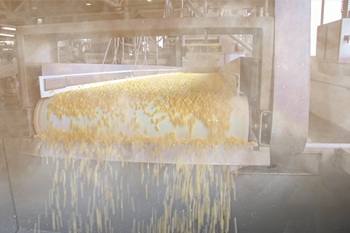
The explosion occurred at a dry corn milling facility in Cambria, Wisconsin on May 31, 2017. While employees were investigating the smell of smoke, they heard an explosion, saw fire coming from piping on equipment, and saw a dust cloud overhead.
Recognizing the potential of a dust explosion, the employees evacuated, and one of the employees attempted to communicate the need to evacuate via radio, but employees who were not in the immediate vicinity of the observed fire were unaware of the emergency and the need to evacuate before secondary explosions occurred.
The CSB determined the cause of the dust explosions was the ignition of combustible corn dust inside process equipment – most likely due to “smoldering nests,” which can occur under certain circumstances when dust builds up in process equipment.
Key Safety Issues
Process Safety Management
Process Hazard Recognition
The company did not recognize that many of its products and waste streams were combustible dusts or contained significant amounts of combustible dust.
Process Safety Leadership
The Board said that failure to effectively adopt process safety principles can indicate weak leadership and inadequate safety culture. The company’s own environmental team was warning the company about the hazards of combustible dust for about three years before the incident.
Dust Hazard Analyses
A month before the incident, the company began to look for a third party to assist with dust hazard analyses (DHAs). Neither the company nor a third-party contractor had performed any DHAs by the time the incident occurred.
A DHA is a “systemic review to identify and evaluate the potential fire, flash fire, or explosions hazards associated with the presence of one or more combustible particulate solids in a process or facility.”
Fugitive Dust Management
CSB said that the secondary explosions accounted for significant building damage, collapse, and employee injuries, and that those secondary explosions were at least partly fueled by fugitive dust that was already present inside the facility before the incident began.
Emergency Preparedness
Employees spent 30 minutes trying to find the source of the smell of smoke. The company’s emergency response plan did not cover what to do if employees identify a potential fire but cannot locate it. The facility lacked an alarm system to notify employees of a potential emergency; employees relied on communications via radios and control rooms to disseminate information about an emergency.
Different teams utilized different channels over the radio, causing a delay in communication. Multiple employees tried to communicate information about the emergency on the same channel, causing confusion and additional delay.

7 Lessons for Industry
- Prevent dust settling and the creation of smoldering nests by ensuring pneumatic transport and dust collection ductwork is designed to maintain a minimum transport velocity.
- Utilize engineering controls to ensure effective prevention and mitigation of combustible dust deflagrations.
- Review fire and building codes to determine the type of construction and evaluate any additional requirements based on the hazards of the materials being handled in the process.
- Apply standards that are applicable to the hazards inside your facility. For example, food safety standards are appropriate for preventing food hazards but not for preventing combustible dust hazards.
- Use the findings of external audits to identify and correct hazards.
- Do not consider a fire inside an enclosed combustible dust handling process; such a fire cannot be characterized without the risk of increasing the severity of the fire.
- Consider abnormal and upset (e.g., not normal) conditions when assessing personal protective equipment (PPE).
Regulatory Coverage of Combustible Dust
NFPA's Combustible Dust Standard
US CSB issued a recommendation for the NFPA to “update its guidance to unify the requirements for performing dust hazard analyses to remove equipment exemptions and require the assessment of all processes.”
In 2025, the NFPA addressed the CSB's concerns with NFPA 660, the Association’s Standard for Combustible Dusts and Particulate Solids.
OSHA HazCom Regulations for Combustible Dust
The Hazard Communication Standard (HazCom) requires employers to inform employees of any operations in their work area where hazardous chemicals are present, and under HazCom, OSHA defines a hazardous chemical as "any chemical which is classified as a physical hazard or a health hazard, a simple asphyxiant, combustible dust, or hazard not otherwise classified."
Employers are required to provide training to employees on combustible dust hazards in the work area, and that training must include how employees can protect themselves from those hazards.
Tags: Chemical safety, combustible dust, CSB, hazardous chemicals, osha
Find a Post
Recent Posts
Compliance Archives

Download Our Latest Whitepaper
Your hazmat paperwork is the first thing a DOT inspector will ask for during an inspection. From hazmat training records to special permits, make sure your hazmat documents are in order.

By submitting your phone number, you agree to receive recurring marketing and training text messages. Consent to receive text messages is not required for any purchases. Text STOP at any time to cancel. Message and data rates may apply. View our Terms & Conditions and Privacy Policy.